
Understanding Cognitive Health
You don't need a diagnosis to start paying attention to brain health. You just need a place to start. Learn what's normal, when to get checked, and how we can support you and your loved one.
SECTION 1
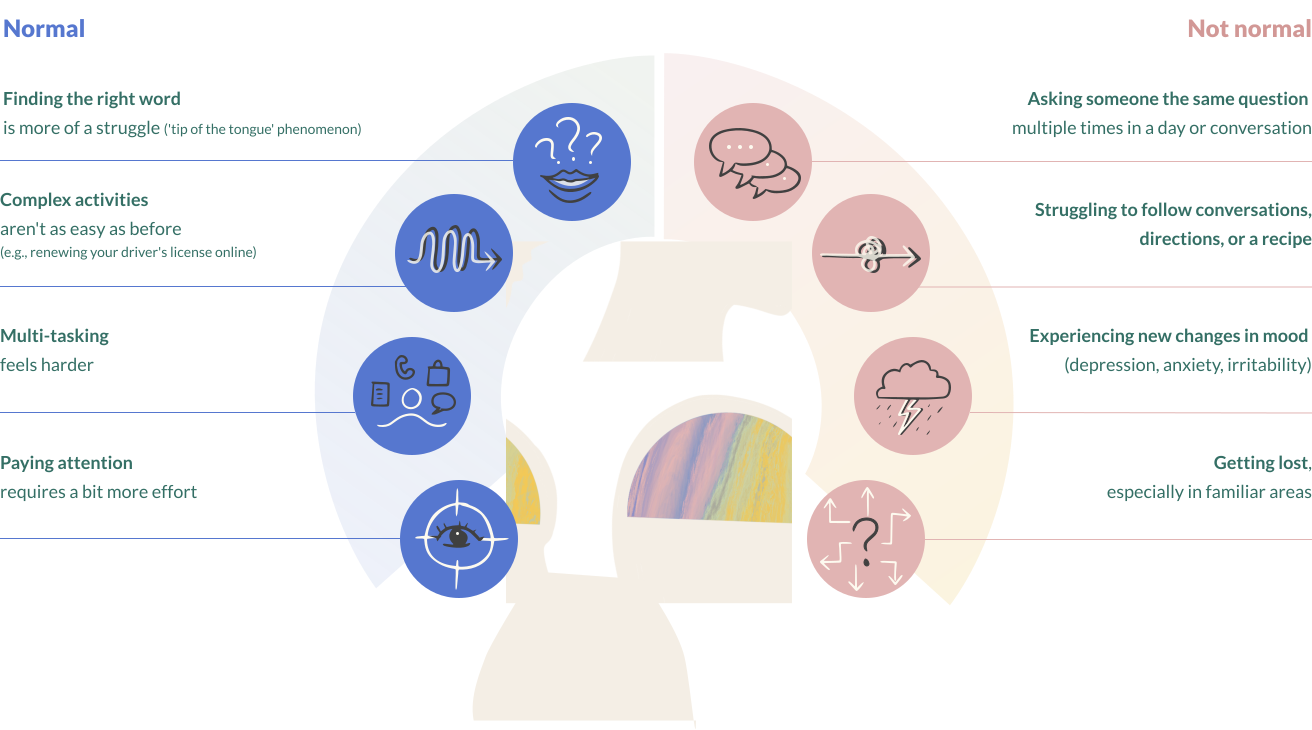
Normal aging vs. something more
Some changes are a typical part of getting older. Others are worth a closer look. Here's how to tell the difference.
SECTION 2
Not every change means dementia
Many of the changes worth paying attention to have treatable, reversible causes. When caught early, symptoms often improve or stabilize. Common culprits include poor sleep (especially sleep apnea), thyroid issues, medication side effects, low B12 or vitamin D, depression or anxiety, untreated hearing loss, and chronic stress.
Even when changes are caused by mild cognitive impairment or early Alzheimer's, there is more we can do today than at any point in the past decade.
Most of these causes are addressable — but only if someone looks for them. That's where the current system often falls short.
SECTION 3
Most people want to talk to their doctor about brain health, yet most never do.
Brain health rarely comes up at a routine doctor's visit, even though research shows most people want to talk about it.
of adults 40 and older have ever talked about brain health with their doctor
of adults 40 and older have discussed ways to reduce dementia risk with their doctor
say they'd welcome that conversation at a routine visit
If your doctor or your loved one’s doctor hasn’t brought it up, you're not alone. That's exactly why taking this step on your own matters.
Brain health conversations are rare in primary care — but they don't have to be rare for you.
The good news is that the research and treatment options for brain health have never been stronger. Keep reading to see what's changed.
SECTION 4
Brain health is health
More reasons than ever to care
Brain health is a core part of overall health, and the case for paying attention has never been stronger. Here are four reasons it matters more now, and why taking action early can make a real difference.
Four reasons it matters now
The Lancet Commission (2024) identified 14 lifestyle and health factors - things within your control - that meaningfully shift the odds.
The first FDA-cleared blood test for Alzheimer's, Lumipulse, can now flag early signs in symptomatic adults 55 and older. No spinal tap or MRI required.
Two FDA-approved medications, Leqembi and Kisunla, don't just manage symptoms. They target Alzheimer's itself and can slow its progression, working best when started early.
Research shows that a healthy lifestyle lowers dementia risk regardless of genetics — including for those with a family history. (Lourida et al., JAMA 2020)
About 2 in 3 adults 40 and older worry about developing Alzheimer’s or dementia — yet only 9% say they know “a lot” about ways to maintain brain health. If you're here, you're already ahead. Alzheimer's Association, 2026.
SECTION 5
Risk factors — what's in your control, what's not
Age, family history, and genetics (including the APOE-ε4 gene) all raise risk, but none of them determine your outcome.
What is in your control:
The Lancet Commission identified 14 modifiable risk factors. These six are where most people can make the biggest difference.
- Hearing. Treating hearing loss is one of the most impactful steps you can take for your brain health.
- Sleep. Quality sleep and treating conditions like sleep apnea helps protects memory and cognition.
- Blood pressure. Keeping your vascular health in check during midlife is one of the strongest predictors of brain health later on.
- Physical activity. Regular movement improves blood flow to the brain and helps build long-term resilience.
- Social connection. Staying engaged with the people in your life is a meaningful form of protection against decline.
- Diet. A Mediterranean-style diet is consistently linked to better cognitive outcomes.
Even with strong family history, addressing the factors within your control can move the curve.
According to the Alzheimer's Association, 3 in 4 adults 40 and older say lifestyle habits like sleep, diet, and exercise play a very important role in brain health, but fewer than half (46%) strongly link those same habits to reducing the risk of Alzheimer's and other dementias. Knowing the connection changes what you do about it.
SECTION 6
Why get checked
Most people who get tested learn one of three things — and all three give you agency:
That doesn't mean do nothing. It's reassurance, and it's a baseline you can measure against in the future.
Many of the factors that affect memory and thinking, including sleep issues, thyroid function, B12 levels, mood, and medication side effects, can be identified and addressed.
Finding something early opens the widest window of options. The sooner you know, the more you can do.
Getting tested is the first step. What that looks like and what it can tell you depends on the type of assessment you complete.
Not all cognitive evaluations are the same, and the difference matters more than most people realize.
Screening vs. comprehensive assessment
Screening
A brief check at your primary care visit that can catch potential flags. Useful as a starting point, but limited in what it can tell you.
Comprehensive assessment
Sunday Health's comprehensive assessment covers memory, attention, language, executive function, mood, labs, imaging, and lifestyle. The goal isn't just to flag concerns - it's to understand the root cause of any changes you're noticing.
Two reasons to act now: early detection keeps more of the prevention window open, and a baseline today gives any future change something to compare against.
SECTION 7
How Sunday Health is different
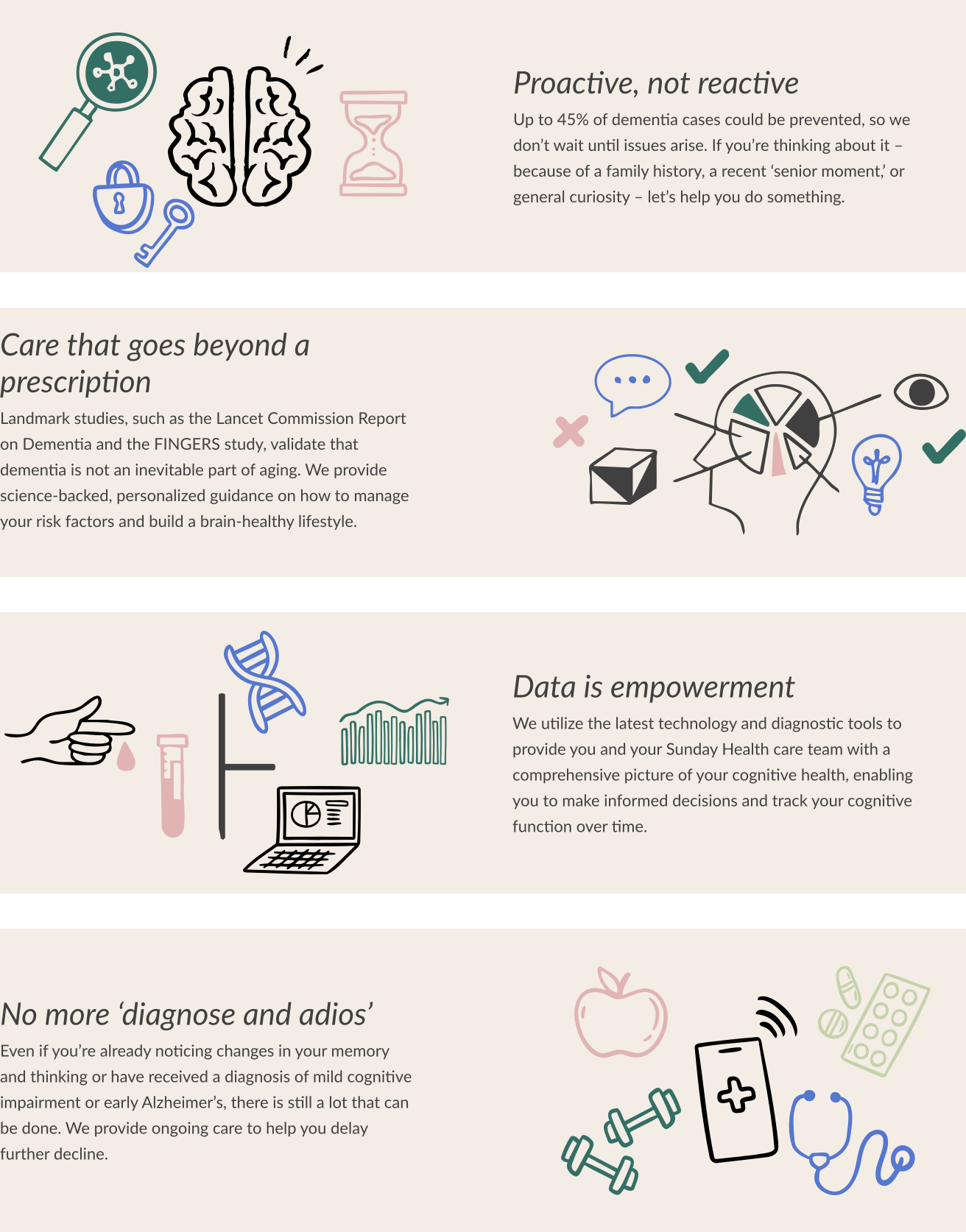
We're not here to hand out a diagnosis. We're here to give you clarity, build a baseline, and help you address what you can.
Cognition is more than memory - it includes attention, language, executive function, and visuospatial processing. We assess all of it, look beyond the surface to understand what's actually driving any changes, and help you build a plan while the window of opportunity is widest.
Our goal is simple. We want to help you hold onto what matters most: your memory, your independence, and your ability to show up for the people you love.
SECTION 8
What to do next
Three simple ways to keep going — start a conversation, book a call, or share this guide with someone you love.
Was this helpful?